$20.00
1
Your cart is empty
Subtotal
We will hold your cart for 15:00.
Buy more, save more
Coupon discount
Shipping
Add 2 more items to unlock your free mystery gift.
Complimentary item.
Total
$20.00
We will hold your cart for 15:00.
If you’ve ever opened a kitchen cabinet and watched a pile of mismatched containers tumble out, you know the problem: most food storage sets are bought without a plan. This beginner’s guide fixes that. You’ll learn how to choose between glass and plastic, which sizes are actually worth owning, how to keep lids from taking over your drawer, and what to buy first so your kitchen stays organized even after a big batch of soup.
Whether you’re stocking a first apartment, starting meal prep, or replacing a drawer full of stained plastic, the same rules apply: start with a few good pieces, use them every day, and add only what earns its space.
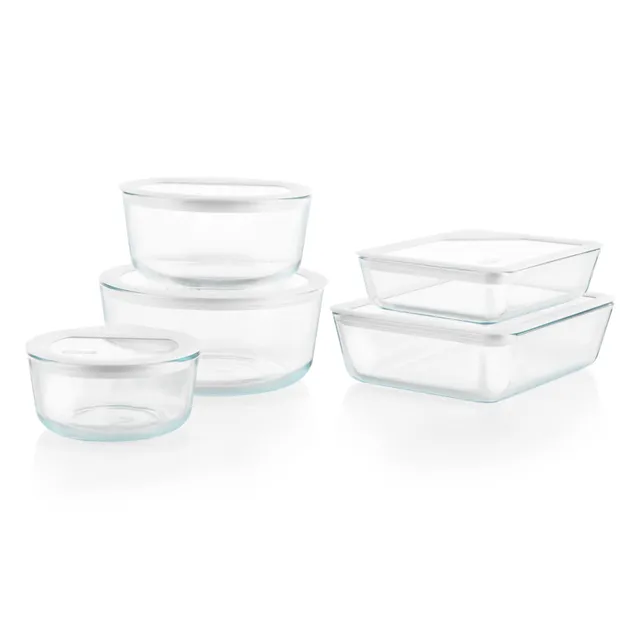
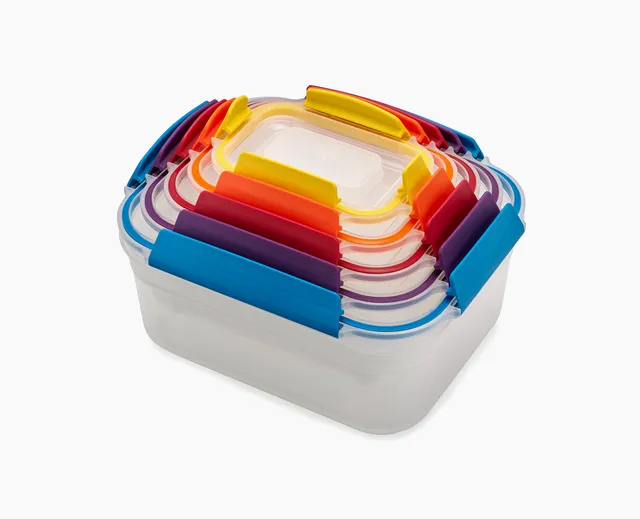
If you’re starting out, the glass-versus-plastic decision comes down to how you’ll use the container. Glass is non-porous, so it doesn’t absorb tomato sauce, curry, or garlic smells. It also moves from fridge to microwave to table without looking tired, and it’s easier to clean. The main downsides are weight and cost, plus the mild dread of dropping a full casserole dish.
Plastic is lighter, cheaper, and usually more compact, but it can stain and hold odors. That’s fine for dry pantry goods or short-term leftovers, less great for anything boldly colored or strongly seasoned. A mix works well for most households: glass for leftovers and meal prep, plastic for snacks and pantry storage.
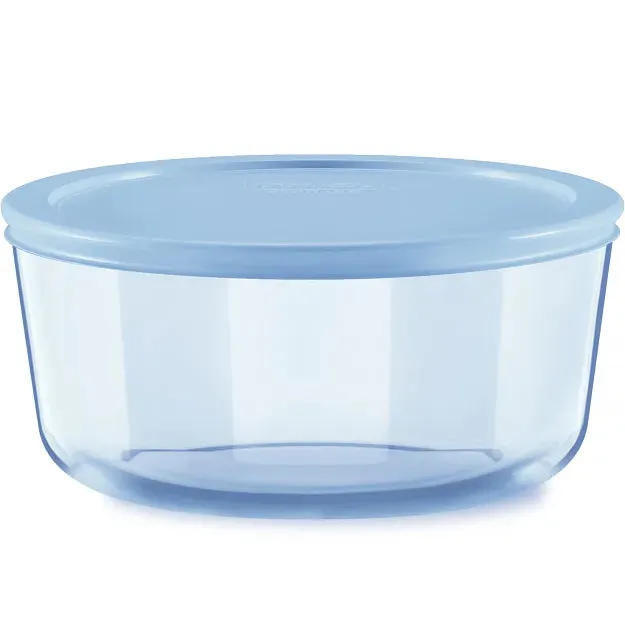
If you want one system that works in most home kitchens, glass is the more forgiving choice. Start with a set like the Pyrex Ultimate 10-piece set. It includes round and rectangular bases with glass lids, so you can cover everything from a single portion to a family-sized casserole.
Beginner mistake: buying a 20-piece set with three oversized bowls and no small containers. Real kitchens run on a few workhorse sizes.
As a beginner, resist the urge to buy every size in existence. Start with six small containers, two or three medium ones, and one large one.
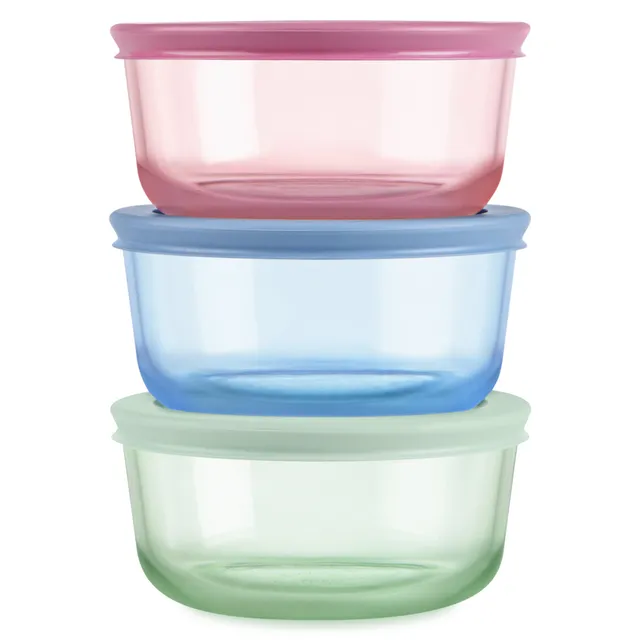
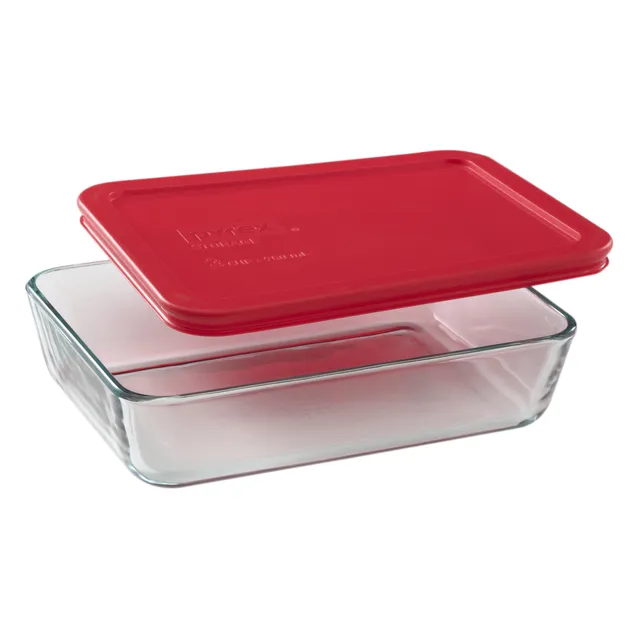
Once you’ve covered the basics, think about how containers behave in your cabinets. Nested sets store one inside another, so a five-piece set takes no more room than a single large bowl. The Joseph Joseph Nest Lock 5-piece set does exactly that. Each container nests inside the next, and the airtight locking lids store on top of the stack. It’s an easy way to keep a full set organized without dedicating an entire cupboard to it.
Stackable containers with flat bases are also worth looking for. They make fridge and freezer organization easier and let you pull out a single container without moving a whole tower.
Lids are the reason most food storage systems fail. They slide into drawers, get mixed up, and create the single most annoying kitchen problem. The fix is simple: keep lids with their containers. With a nesting set like Joseph Joseph’s, the lids clip onto the stack, so you never lose them. With glass sets, store each container with its own lid, or use a simple in-drawer organizer sized to your largest lid.
If a lid breaks, don’t throw out the whole system. Pyrex replacement lids are available for most Simply Store sizes, and the brand’s storage lines are designed to work together. Replacing one lid is cheaper than replacing the set.
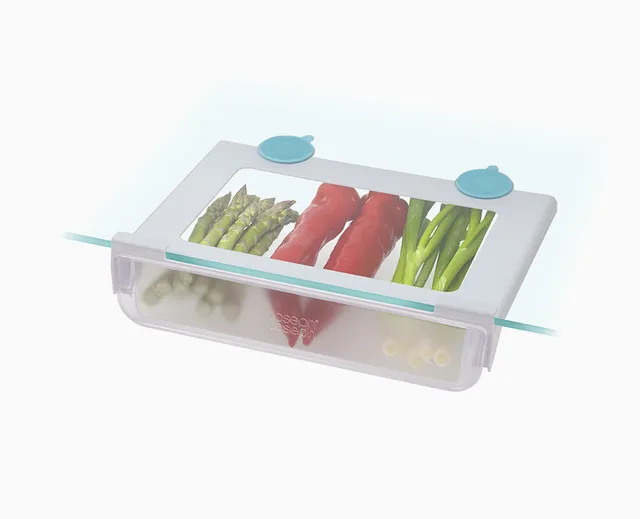
Food storage isn’t just about containers; it’s about giving every item a place. Use vertical space on fridge shelves with a Joseph Joseph FridgeStore under-shelf drawer. It slides beneath a shelf to hold small containers, cheese, or snack packs without taking up shelf space. Combine it with round and rectangular glass containers, and you can see everything before it gets lost in the back of the fridge.
Meal prep becomes easier when your containers are uniform. Same-size rounds stack cleanly, rectangular containers fill a fridge shelf edge to edge, and labeled lids mean no mystery leftovers.
Most glass storage bases are dishwasher safe; plastic lids should go on the top rack to avoid warping. When reheating leftovers, leave the lid off or vent it so steam can escape. And don’t plunge a hot glass container into cold water — let it cool down first to avoid thermal shock.
For stains and odors, make a paste of baking soda and water, or fill the container with warm water and a splash of vinegar. Glass releases almost everything with a simple wash; plastic is the harder one to rescue, which is another reason to make glass your default for leftovers.
Start with one set of glass containers in the two or three sizes you use most. That alone takes care of stained plastic and gives you enough for a week of meal prep. Next, add a nesting set if cabinet space is tight. Finally, pick a few single pieces for specific jobs: a wide 7-cup round for stews, a 3-cup rectangular for work lunches, and an under-shelf drawer for extra fridge space.
You don’t need a perfectly matching kitchen. You need a system that makes it easy to put food away and find it later. When in doubt, choose glass for anything you’ll reheat, and choose sizes you’ll actually use.
Food storage doesn’t have to be complicated. Buy more glass than plastic, pick a few versatile sizes, keep lids where you can find them, and store containers in a way that makes sense for your space. Once you do, a big pot of soup turns into a week of easy lunches instead of a fridge full of mystery bowls.
Ready to start? The products below are the same ones we’d recommend to a friend starting from scratch.